
Keeping Complex Cases In-House: How Austin Dentists Use In-Office Anesthesia
Every practice has cases it currently sends elsewhere. The full-arch implant case, the medically complex patient, the child with special needs, the adult with severe phobia. An in-office anesthesia partner lets you keep many of those cases, the patients, and the treatment plan from start to finish. This is an overview for practice owners and managers in Austin and across Central Texas, including Bee Cave, Lakeway, Cedar Park, Round Rock, and Georgetown.
The cases that usually get referred out
Most practices refer out a predictable set of cases:
- Long or complex restorative and prosthetic work that is hard to complete with an anxious or uncooperative patient
- Full-arch and multi-site implant cases
- Medically complex patients a practice does not feel equipped to sedate
- Patients with severe dental phobia or a strong gag reflex
- Children and adults with special needs
When these go out the door, the patient relationship and the treatment plan often go with them.
What changes with an in-office anesthesia partner
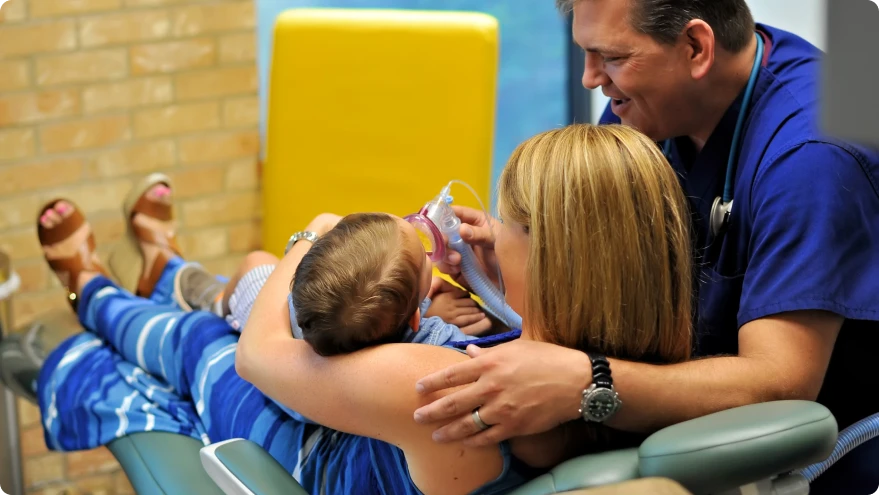
With a physician anesthesiologist managing the anesthesia, you can keep more of these cases in your own operatory. The patient stays with the practice they already trust, in a familiar setting, and you follow the treatment plan through to completion. The anesthesia partner brings the team and the equipment, so there is no capital outlay and no anesthesia staff to hire.
At Texan Anesthesiology Associates, Dr. David Williams, MD, is the physician on every case, supported by a clinical care team that handles the pre-procedure medical workup before the day of the case. For medically complex patients, Dr. Williams coordinates with the patient's other physicians when needed.
Why the physician-led model expands what you can keep
The cases worth keeping are often the complex ones, and those are exactly the cases that call for a physician anesthesiologist. A provider with a cardiology and critical care background, supported by a clinical care team, lets a practice take on cardiac history, respiratory concerns, advanced age, and failed-sedation patients with more confidence than it might have sedating those patients itself. The result is that the practice can keep cases it might otherwise feel it has to send away.
Continuity of care, completed in one place
Keeping a case in-house is also a continuity-of-care decision. The patient completes treatment with the provider who planned it, in the setting they know, often in fewer visits because more work gets done in a single sedated appointment. Across more than 13,000 in-office cases, Dr. Williams has a 100% nasal intubation success rate, post-op nausea under 1%, and a typical discharge around 30 minutes.
Talk to Dr. Williams about which of your cases could stay in-house. Call 512-596-1775 or email info@texanaa.com. INTERNAL LINKS: Adult Dental Anesthesia, Pediatric Dental Anesthesia, Why In-Office Anesthesia?, Our Process, About Dr. Williams