Is Dental Anesthesia Safe for My Child? An Austin Parent's Guide
If your child's dentist has recommended anesthesia for a dental procedure, the first question most parents ask is whether it is safe. Pediatric dental anesthesia is very safe when it is planned and managed by a qualified physician anesthesiologist working alongside your child's dentist, with the right equipment and a care team in the room. Like any medical procedure, anesthesia carries some risk, even though that risk is small. The details below are what keep it small.
This guide is written for parents in Austin and the surrounding Central Texas communities, including Bee Cave, Lakeway, Cedar Park, Dripping Springs, Round Rock, and Georgetown. It explains how anesthesia for children works, what questions to ask before the procedure, and how Texan Anesthesiology Associates approaches pediatric cases.
Who is in the room
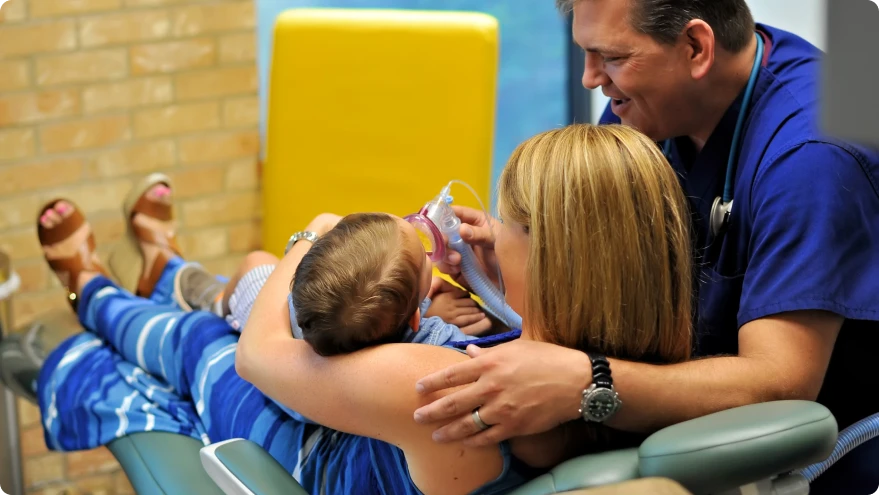
Two professionals care for your child during the procedure. Your child's dentist performs the dental work. A physician anesthesiologist manages the anesthesia and monitors your child the entire time, supported by a clinical care team of nurses and medical assistants. The dentist focuses on the treatment, and the anesthesiologist focuses on your child's comfort and safety, so neither job is split between two responsibilities.
At Texan Anesthesiology Associates, Dr. David Williams, MD, is the physician anesthesiologist on every case.
What makes it safe, and what the risk actually is
Anesthesia for children is treated as its own area of expertise, because children respond to anesthetic medications differently than adults and the plan has to account for age, weight, and health history. Done well, it is very safe. Done without the right provider, equipment, or monitoring, the margin gets thinner. That is the honest version, and it is why the choice of provider matters.
The risk of a serious problem is low when a qualified physician anesthesiologist manages the case with proper monitoring and a care team present. No one can promise zero risk with any medical procedure, and any provider who does is not being straight with you. What a strong team does is keep the risk as low as it can reasonably be.
What a well-run setup looks like
Office-based anesthesia is held to defined standards in Texas. The anesthesia provider should arrive with a full anesthesia machine, a complete monitoring suite, recovery monitors, anesthetic agents, and emergency supplies and medications. This is the same setup that Texas office-based anesthesia rules and national monitoring standards require. Your child is monitored continuously from the start of the procedure through recovery.
Questions worth asking before the procedure
- Who will manage my child's anesthesia, and will it be a physician anesthesiologist?
- Will the anesthesiologist be present and monitoring my child for the entire procedure?
- Who else is on the care team during the procedure and recovery?
- What monitoring and emergency equipment will be in the room?
- Who reviews my child's medical history before the day of the procedure?
- Can I be with my child as they wake up?
A practice that does this well will answer every one of these directly.
How Texan Anesthesiology Associates approaches pediatric cases
Dr. Williams has specialized training in pediatric anesthesia and was a leading provider for pediatric patient comfort at Dell Children's Hospital. His pediatric work continues today across thousands of in-office cases for dental practices throughout Central Texas. Post-op nausea runs under 1%, and most children are ready to leave within about 30 minutes of the procedure ending.
Before the day of the procedure, the clinical care team reviews your child's complete medical history, gathers records, and answers your questions on a pre-procedure call. Parents are brought into recovery as their child wakes up.